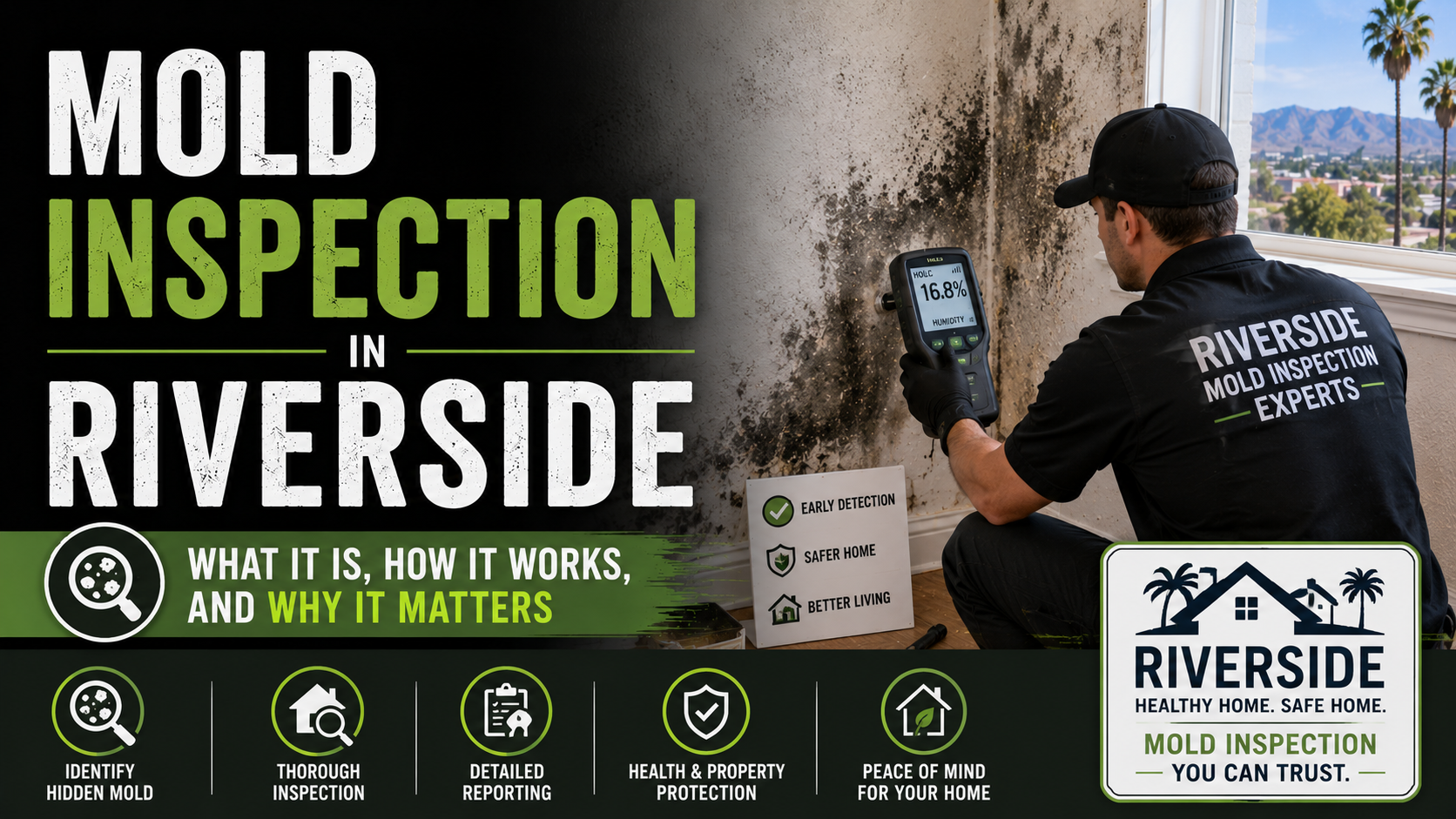
Mold is one of the most pervasive and potentially hazardous issues affecting residential and commercial properties across California. In Riverside, where warm temperatures and periods of elevated humidity create conditions that can support mold proliferation especially following water intrusion events mold inspection has become an important component of responsible property ownership and management.
A mold inspection is a professional evaluation of a property conducted to determine whether mold is present, where it is located, what types of mold are involved, and how extensive the growth is. It is a distinct and specialized process that goes well beyond a simple visual walkthrough. For Riverside homeowners, renters, real estate buyers, and commercial property managers, understanding what mold inspection involves and why it matters is essential for making informed decisions about property health and safety.
What Is Mold and Why Does It Grow?
Mold is a type of fungus that exists naturally in the environment, with mold spores constantly present in both outdoor and indoor air. In outdoor settings, mold plays an important ecological role in breaking down organic matter. Problems arise when mold spores settle on suitable surfaces within a building and begin to colonize and grow.
Mold requires three conditions to thrive: a food source (organic materials such as wood, drywall paper, insulation, and fabric), appropriate temperature (most molds grow actively between 60°F and 80°F), and moisture. Of these three factors, moisture is the one most readily addressed through property maintenance and prompt response to water events.
In Riverside, mold growth can be triggered by a wide range of water events from plumbing leaks and roof failures to flood damage and high indoor humidity. Crucially, mold can begin to establish itself within 24 to 48 hours of a moisture event, meaning that even a relatively minor water intrusion that goes unaddressed can result in a significant mold problem within days.
Common Signs That Mold May Be Present
Mold is not always visible. It frequently colonizes hidden areas such as inside wall cavities, beneath flooring, above ceiling tiles, in crawl spaces, and within HVAC ductwork. However, there are common warning signs that may indicate mold presence even when it cannot be directly seen.
A persistent musty or earthy odor particularly in enclosed spaces such as closets, bathrooms, or basement areas is often the first indicator of hidden mold growth. Visible water staining, discoloration, or dark spots on walls, ceilings, or flooring can also signal mold activity, though staining alone does not confirm mold.
Health symptoms are another important indicator. Mold exposure has been associated with respiratory irritation, coughing, sneezing, eye irritation, skin rashes, and exacerbation of conditions like asthma and allergies. When occupants experience unexplained health symptoms that improve when they leave the property and worsen upon return, mold contamination should be considered as a possible contributing factor.
Properties that have experienced flooding, plumbing leaks, roof damage, or significant condensation issues especially where drying was delayed or incomplete are at elevated risk of mold development and should be inspected even in the absence of obvious signs.
What Does a Professional Mold Inspection Involve?
A professional Mold Inspection Riverside is a systematic, science-based evaluation that typically involves several components.
Visual Inspection: Certified mold inspectors conduct a thorough visual examination of all readily accessible areas of the property. This includes walls, ceilings, flooring, bathrooms, kitchens, utility areas, crawl spaces, attics, and basements. Inspectors look for visible mold colonies, water stains, discoloration, and structural conditions such as inadequate ventilation or moisture accumulation that are conducive to mold growth.
Moisture Assessment: Because mold growth is fundamentally linked to moisture, a thorough inspection includes a detailed moisture assessment. Inspectors use moisture meters to measure moisture content in building materials and infrared (thermal imaging) cameras to detect temperature differentials that may indicate hidden moisture accumulation behind walls or beneath flooring. This technology allows inspectors to identify moisture problems that are completely invisible to the naked eye.
Air Sampling: Air sampling is a key scientific component of a comprehensive mold inspection. Inspectors collect air samples from interior areas of the property and compare them against an outdoor reference sample taken at the same time. Laboratory analysis of these samples identifies the types and concentrations of mold spores present in the indoor air. Elevated indoor spore counts compared to outdoor levels indicate that an active mold source is present within the building.
Surface Sampling: When visible mold or suspicious staining is observed, surface samples may be collected for laboratory analysis. This can be done using swabs, tape lifts, or bulk sampling of affected materials. Laboratory analysis identifies the specific mold species present, which can be relevant for health assessments, insurance claims, and legal matters.
Inspection Report: Following the inspection, a detailed written report is provided that summarizes all findings, including the locations of confirmed or suspected mold, moisture measurements, laboratory results, and recommendations for remediation or further investigation. This report is an important document for property owners, buyers, insurers, and legal proceedings.
Types of Mold Commonly Found in Riverside Properties
Laboratory analysis of mold samples can identify the specific species involved. Different mold species have different characteristics, growth patterns, and potential health implications.
Cladosporium is one of the most common indoor molds, typically found on fabrics, wood, and plant-based materials. It is usually dark green or black and can trigger allergic reactions in sensitive individuals. Penicillium is another widespread indoor mold, often found on water-damaged materials such as wallpaper, carpeting, and insulation. It is bluish-green and associated with allergic symptoms.
Aspergillus is a very common genus with many species, some of which can produce mycotoxins toxic chemical compounds that can cause more serious health effects. Stachybotrys chartarum, commonly known as black mold, is a particularly toxic species associated with severe health effects in high-exposure situations. It requires continuous moisture and is most commonly found on materials with high cellulose content, such as drywall and ceiling tiles, that have been consistently wet.
Not all dark-colored mold is Stachybotrys, and the only reliable way to identify mold species is through laboratory analysis of professionally collected samples.
Mold Inspection vs. Mold Remediation: Understanding the Difference
A critically important distinction for Riverside property owners is the difference between mold inspection and mold remediation. Mold inspection is the process of detecting, identifying, and assessing mold. Mold remediation is the process of physically removing mold and addressing the conditions that caused it.
Ideally, these two services should be performed by different companies to avoid conflicts of interest. An inspection company whose findings determine whether remediation is needed has a financial incentive to find mold. When inspection and remediation are performed by separate entities, the inspection findings are more objective and reliable.
A good mold inspection will clearly identify the scope of any mold problem and provide a remediation plan that a separate contractor can implement and bid on. A post-remediation inspection sometimes called a clearance inspection is then performed to confirm that remediation was successful and that mold levels have returned to acceptable levels.
When Should You Schedule a Mold Inspection?
There are several situations in which scheduling a professional mold inspection in Riverside is particularly advisable. Following any significant water intrusion event whether from flooding, plumbing failure, or a roof leak inspection should be considered, especially if drying was delayed.
Real estate transactions are another common trigger. Buyers of properties in Riverside are increasingly commissioning mold inspections as part of their due diligence, particularly for older homes or properties with known water damage history. For sellers, a pre-listing mold inspection can identify and resolve issues before they become deal-breakers.
Any time occupants experience unexplained health symptoms consistent with mold exposure, or when a persistent musty odor is noticed, a professional inspection is warranted. The peace of mind provided by a clean inspection report or the critical information provided by findings of mold makes professional mold inspection a valuable investment for any Riverside property owner.